
Pacific Marine Airways, Chaplin Airlines, the Goodyear Pony Blimp, and United Airlines.
Pacific Marine Airways (1922-1928) Converted World War 1 Curtiss Hydroplane, Model HS-2L carried six passengers from 1925-1931. Later the route from the Mainland was taken over by Western Air Express in 1928.
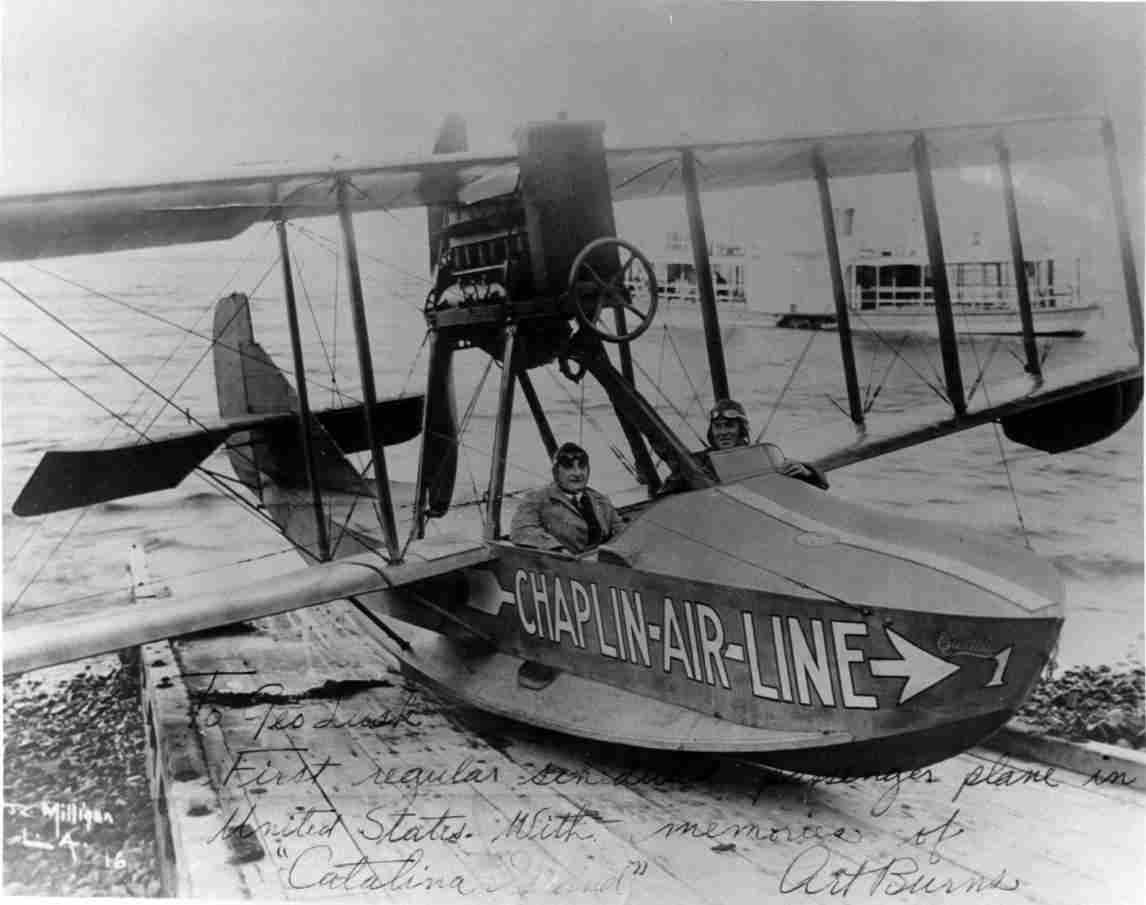
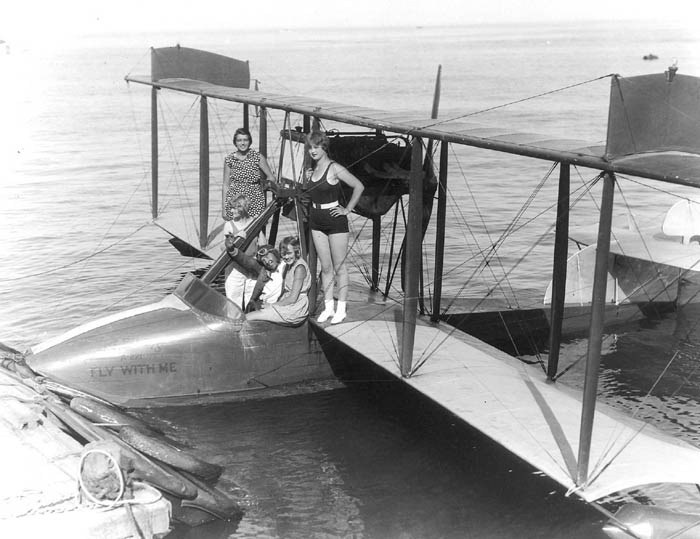
In 1919, Syd Chaplin, half brother of Charlie Chaplin, started Chaplin Air Lines with a Curtiss "Sea Gull." It had a single Curtiss K-6 150 H.P. engine and was capable of flying at 76 m.p.h. while carrying two passengers. Syd Chaplin is seated on the left and Art Burns is in the cockpit.
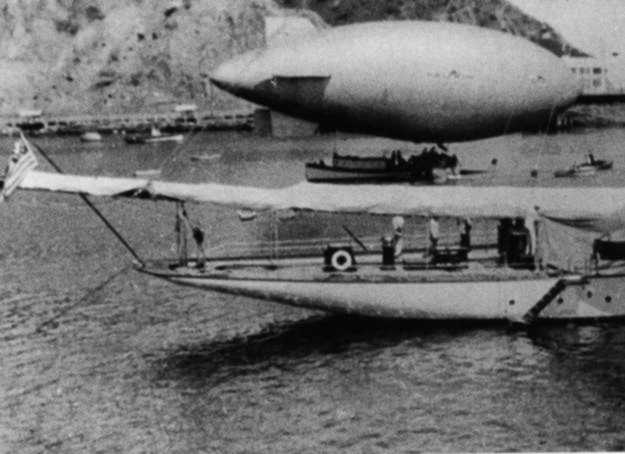
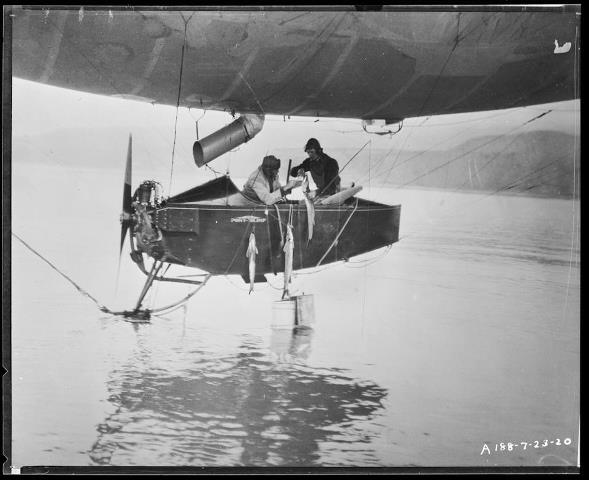
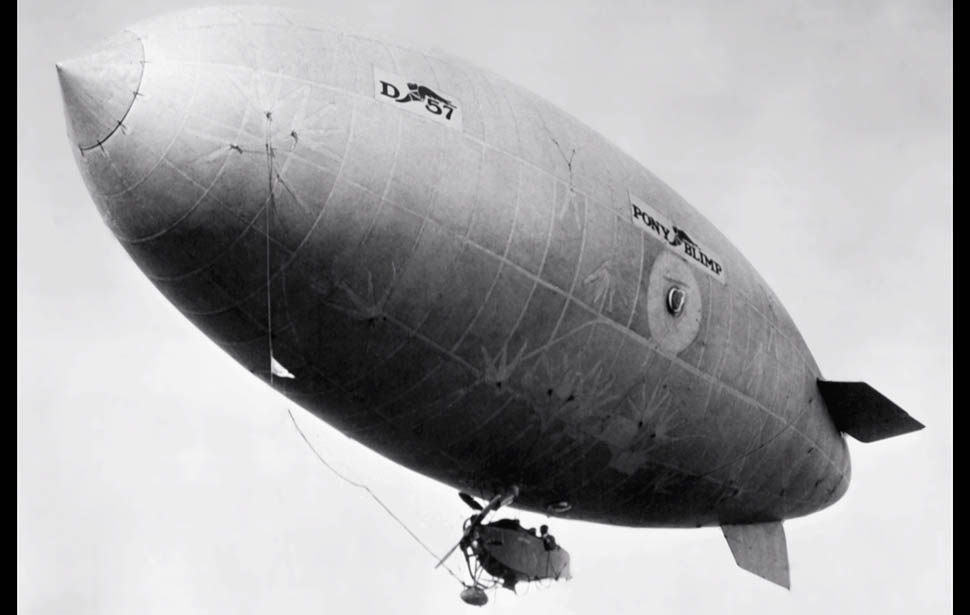
Goodyear Pony Blimp, 1920-1923. The airship was 95 feet long and powered by a single Ford Model "T" engine and carried two passengers. The pilot, passengers, and engine were all crowded together in a small open compartment, suspended below the airbag, which was inflated with non-flammable helium. The Blimp was also a popular way to fish for Barracuda.
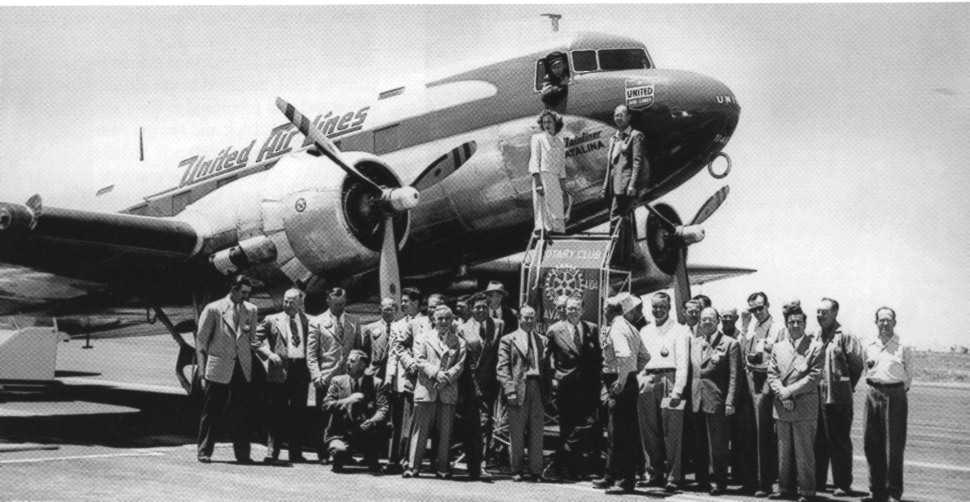
Avalon Rotary Club members gathered at Catalina's Airport-in-the-Sky to greet the inaugural of a United Airlines DC-3 in 1946. Philip Wrigley was a board member of United Airlines for many years and also had a great interest in aviation.

The S-43 remained in the lake until it was salvaged in 1981 by Gary Larkins. The aircraft has been at the Pima Air and Space Museum since 1985 as a static display after undergoing an extensive restoration.
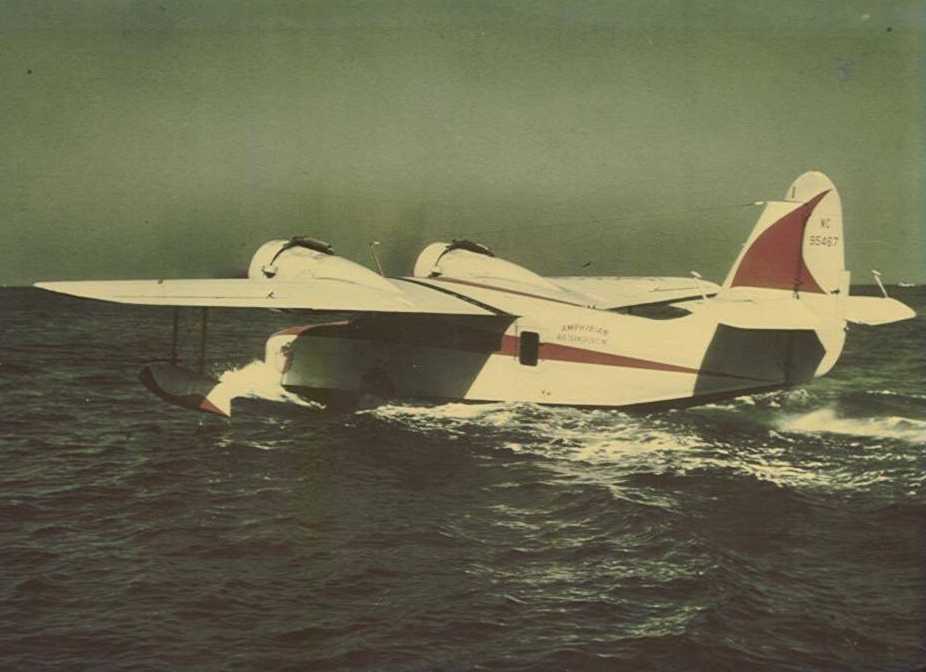
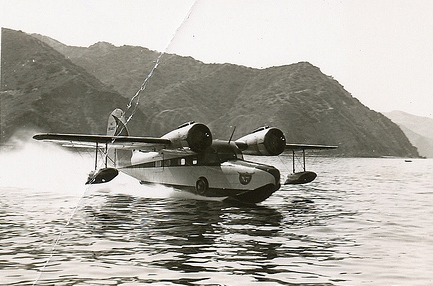
Amphibian Air Transport Grumman Goose NC95467. A rare color photograph. Photo courtesy of Stuart Hanley.
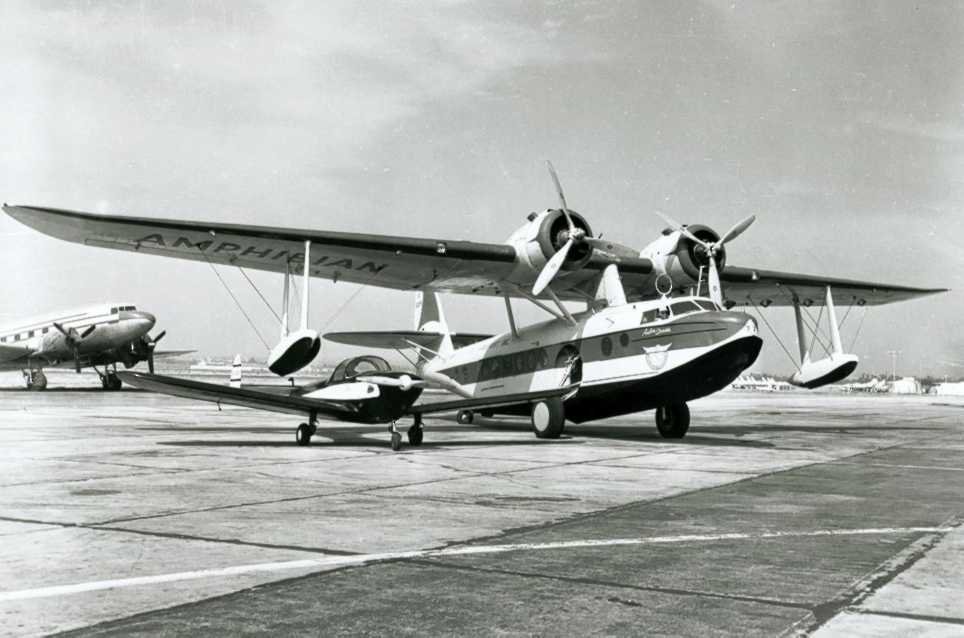
Amphibian Air Transport's Sikorsky S-43, serial #4325 (right). This aircraft was acquired by Amphibian in 1947 by from Inter-Island Airways (later Hawaiian Airlines) and flew with Amphibian until May of 1948. The aircraft changed hands several times and later crashed and sank in Lake Tetlin, Alaska in 1951.
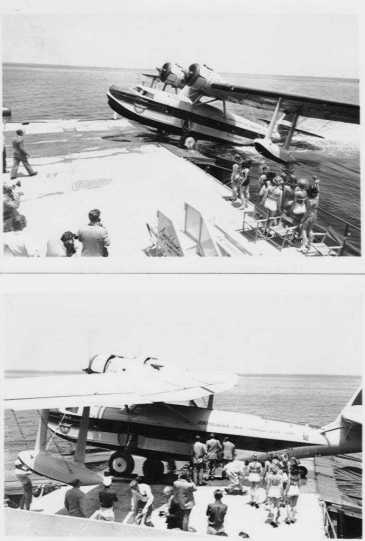
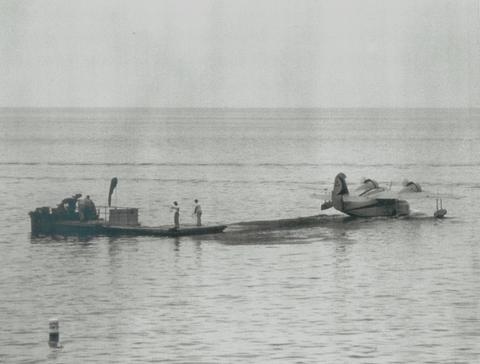
These two photos (right) show the unusual floating barge and ramp system that Amphibian Air Transport devised. The pilot would power the airplane up the ramp and unload passengers on the barge. The airplane would be reloaded and the pilot would roll down the ramp back into the ocean for departure. This floating barge and ramp system was nicknamed "Hanley's Folly" after Amphibian Air Transport pilot Bob Hanley. Shown in the photo is an Amphibian Air Transport's Sikorsky S-43 and the inaugural ramping, complete with "Bathing Beauties" in the foreground.
Thanks to Stuart Hanley for these photos.
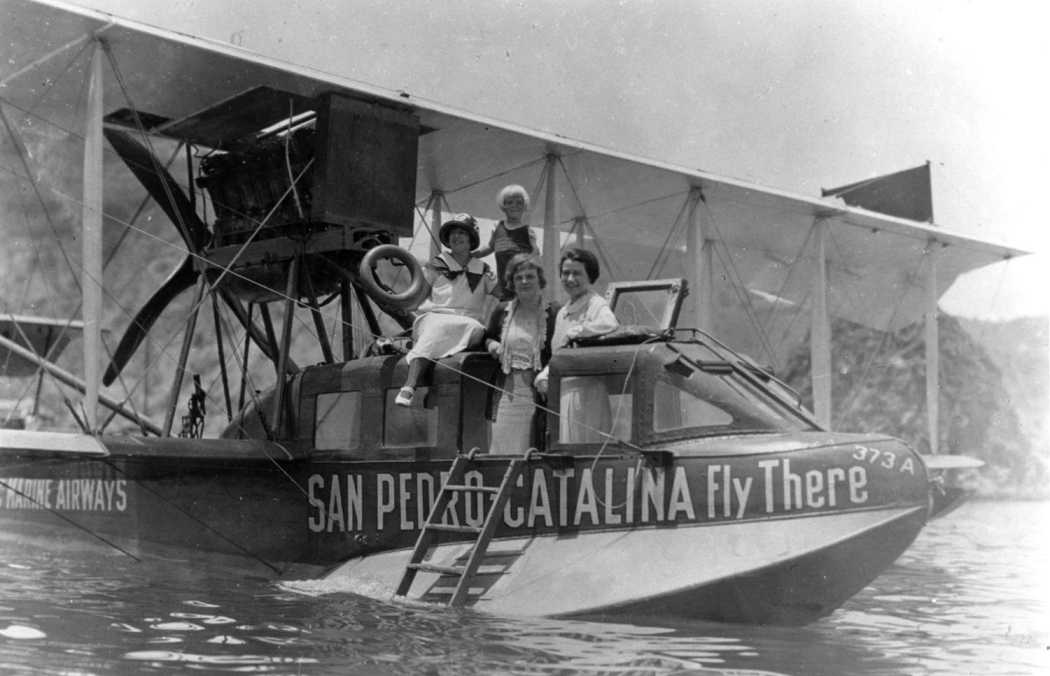
Pacific Marine Airways, 1920s. Avalon Bay
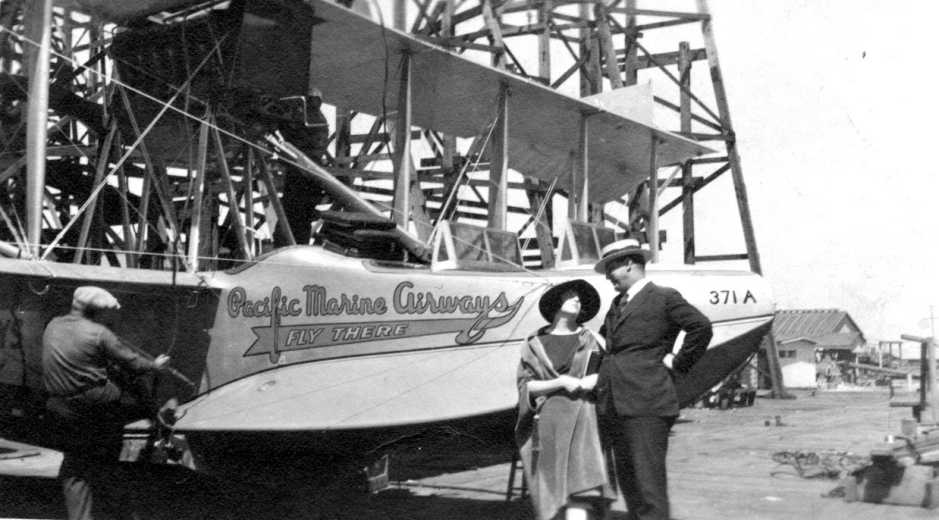
Pacific Marine Airways San Pedro Terminal, 1920s
 | ||||||
| ||||||
| ||||||
Amphibian Air Transport
1947-1949
Amphibian Air Transport was the earliest airline to fly the rugged Grumman Goose to Catalina Island, in addition to three Sikorsky S-43 amphibians. Amphibian Air Transport flew 12 round trips daily from Long Beach to Avalon and six round trips from Burbank. Extra flights were flown as needed on Sundays and Holidays. Amphibian Air Transport used a unique floating barge and ramp system that was tied up near the Casino in Avalon Bay to board and disembark flights. The owner of the airline was Ken Brown and Vice-President was C.E. Hunsinger.
Amphibian Air Transport Fleet:
Grumman Goose:
NC95467, NC95468,
NC68157, NC68158
Sikorsky S-43:
NC53294, NC53295, NC16934

Airline Logo and Paint Liveries
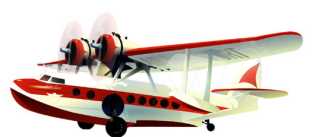
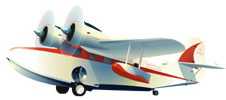

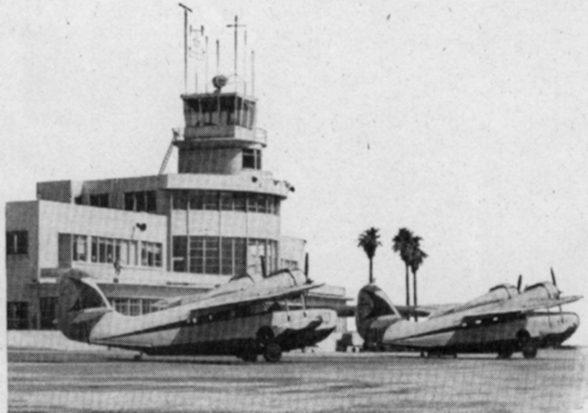
Amphibian Air Transport's Goose fleet at Long Beach Airport.
| ||||||
| ||||||
| ||||||
| ||||||
| ||||||

| ||||||
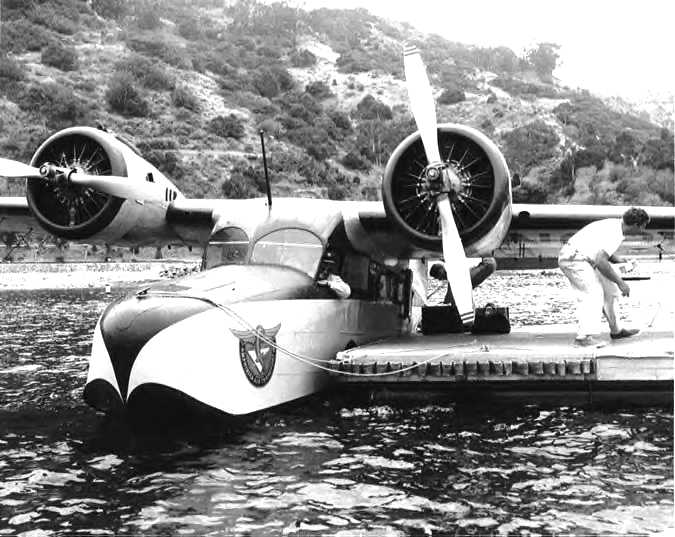
Amphibian Air Transport Goose at the dock in Descanso Bay in the late 1940s. Captain Bob Hanley is in the cockpit. Photo courtesy of Stuart Hanley.
| ||||
| ||||
| ||||||
Amphibian Air Transport's Descanso Bay dock.
| ||||||
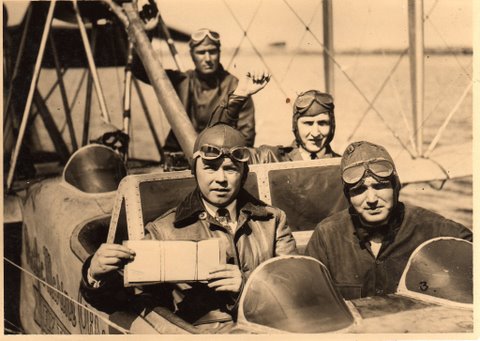
Fly with Me, approximately 1925. Seated in the cockpit is Art Burns and friends.
| ||||||
| ||||||
Amphibian Air Transport Goose departing Avalon.
| ||||||
| ||||||
| ||||||
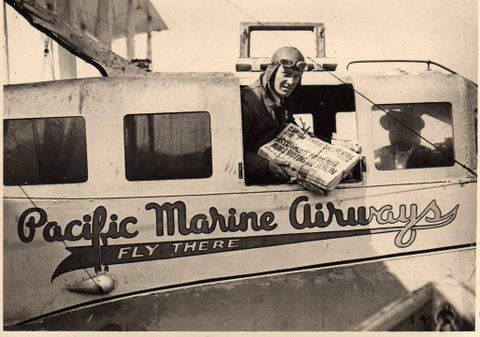
Pacific Marine Airways delivering the news to Catalina Island. Photo courtesy of Fred Austin lll
Delivering a load of securities to Catalina Island by air. Photo courtesy of Fred Austin lll.
| ||||||
Fishing for Barracuda from the gondola of the Goodyear Pony Blimp.
America's First Airship Line
In California, the first dirigible airship line in America carries passengers between Los Angeles and Catalina Island.
The carrier is a Goodyear Pony Blimp, the right-of-way is the sky, the terminals are the waters of Avalon Bay and a hangar on the mainland.
In sixty minutes, the Pony Blimp makes a thirty-nine mile flight, saving two hours over the usual journey by land and water, and four hours on the round trip.
So, little by little, do we see the inevitable day brought closer when airships beyond today's conception will carry great passenger and freight loads.
In this development Goodyear deems it a privilege to work to have the opportunity for the pioneer to master the great secrets of lighter-then-air flying.
If you are interested in airships for sport, for survey, for commerce, write to the Goodyear Tire and Rubber Company in Akron, Ohio, or Los Angeles, California.
The following is from a 1920 Goodyear Tire and Rubber Company advertisement:
| ||||||
